
Ingredients
Turmeric: More Than Just a Pretty Yellow
Meet turmeric beyond its golden colour: a brief history, practical curry uses, careful seasoning and a clear look at curcumin and health claims.
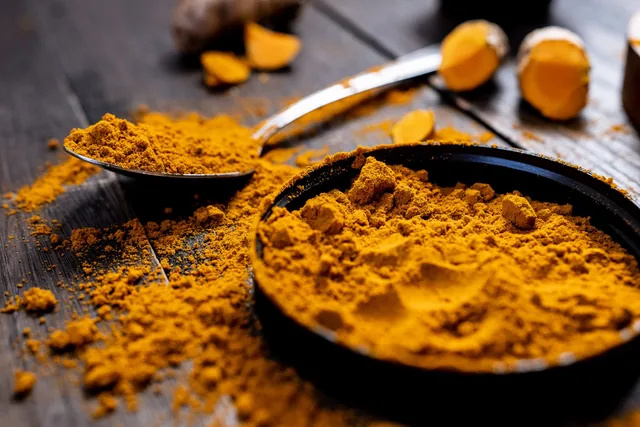
Turmeric has a talent for leaving evidence. A spoon, a chopping board, the corner of a tea towel: if it has been in the kitchen, something usually remembers.
Its colour is so striking that it can distract us from the flavour. Yet turmeric is more than a way to make rice or potatoes look golden. It brings an earthy, slightly bitter character, and learning to use that character is more useful than chasing the brightest possible shade.
The spice growing underground
Turmeric comes from Curcuma longa, a member of the ginger family. What is often called the root is actually an underground stem, or rhizome. Kew describes a plant known through cultivation, with rhizomes used to make both spice and dye. Fresh pieces and dried powder begin with that same plant, but behave differently in a recipe. Kew's turmeric profile
A recipe calling for powder expects a dry, finely ground ingredient. Fresh turmeric brings moisture and texture as well. Enjoy exploring it, but start with a method written for fresh turmeric instead of guessing a universal spoon-for-spoon conversion.
A colour with a long history
Kew records turmeric use in India for at least 2,500 years. Its story includes cooking, dyeing and cultural practices; in Hindu traditions it is associated with auspicious occasions, including weddings. That is a much longer and richer history than the recent popularity of golden drinks might suggest. Turmeric's cultural history
There is also a small chemistry surprise: turmeric changes colour in alkaline conditions. Its use as an indicator belongs in the science story, though, not as a reason to add baking soda to your curry. The colour of dinner is only one part of whether dinner tastes good. Kew explains the colour change.
What it does in a Durban curry
Turmeric can join chilli, cumin, coriander, ginger and garlic in a savoury mixture. It should contribute to the whole, rather than turn the gravy into a demonstration of how much yellow one pot can hold.
Our Durban Green Banana Curry is a useful example: turmeric joins onion, mustard seeds, jeera and curry leaves. You can follow its place in a relatively short ingredient list without trying to untangle a large commercial blend.
For a different setting, Brenda's Pickled Fish uses turmeric in a sauce with onions, ginger, vinegar and other seasonings. These are different dishes, with different balances. The right amount belongs to the recipe you are cooking.
Use the spoon before the enthusiasm
- Measure away from the pot. You can see the amount clearly and keep steam out of the jar.
- Read the masala ingredients. Turmeric may already be included, so an extra spoon changes the intended balance.
- Follow the cooking stage. Powder added to a hot spice mixture needs controlled heat and prompt attention to the next step.
- Judge the finished dish. A yellow gravy can still be under-seasoned, while a red curry can contain turmeric without advertising it.
Our guide to yellow potatoes looks at that familiar curry detail. Use it alongside the full recipe, rather than treating colour as a separate task that overrides the cooking method.
Pairings, and the black-pepper question
Ginger and garlic are useful savoury companions. Coriander and cumin help build a fuller spice mixture, while chilli supplies a separate kind of heat. There is no culinary rule that turmeric must always be accompanied by black pepper, or that a curry without pepper has somehow failed.
You may have read that pepper helps the body absorb curcumin. The research discussion concerns piperine and particular curcumin formulations. It does not create a compulsory kitchen ratio. Season food for the dish in front of you rather than trying to turn dinner into a supplement formulation. NCCIH explains the formulation issue
What the health evidence actually says
Curcumin is one of turmeric's important components. Some studies of turmeric or curcumin products show promising results for knee osteoarthritis symptoms, but NCCIH says stronger evidence is needed and there is not enough certainty to establish broad health benefits. A measured amount of spice shared across a meal is not equivalent to the products studied. NCCIH's evidence summary
More is not automatically better: liver injury has been reported with some curcumin products designed for increased absorption. That is a reason to discuss supplements with a clinician, especially if you take medicines, rather than adding them to food or assuming “natural” means harmless.
Keep it useful, not just colourful
Buy turmeric from a reputable food supplier, keep the powder tightly closed in a dry cupboard and use a clean, dry spoon. Wipe spills promptly, and give fresh turmeric its own clean preparation space so the colour does not travel farther than intended.
The reward is straightforward: a spice you understand well enough to use with confidence. Bright yellow is lovely. A balanced curry, with everyone happily going back for another spoonful, is better still.