
Ingredients
Chillies & Chilli Powder: Heat, Colour and Good Judgment
Understand chilli heat, colour and flavour, fresh versus dried forms, misleading powder labels and how to build a Durban curry people enjoy eating.
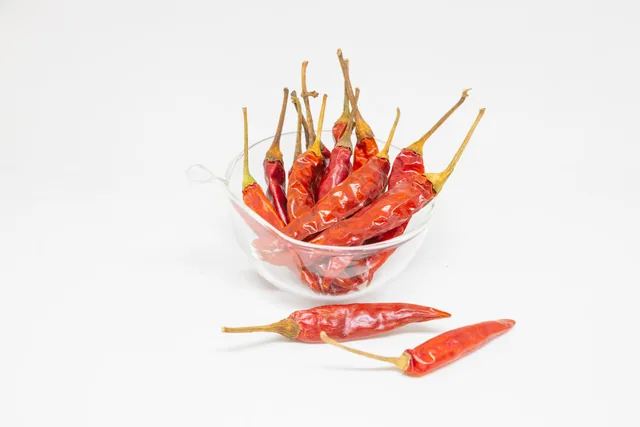
Ask a group of curry lovers how hot a curry should be and you may need to put the kettle on. Everybody has a position. Some want a gentle glow; others begin by checking whether there is more chilli on the table.
Between those preferences sits the interesting part: chilli has flavour as well as heat. Getting to know it means thinking beyond whether the next spoonful will make you reach for a tissue.
A traveller from the Americas
Chillies belong to the genus Capsicum. Kew traces Capsicum annuum, which includes many familiar sweet and hot peppers, to Mexico and Guatemala. Its spread through European trade and Portuguese colonies helped carry it into Africa and Asia. Today's curry traditions show how thoroughly an introduced ingredient can become part of a local food culture. Kew's pepper profile, its historical account
That history does not make a Durban curry any less Durban. Cuisines develop through cooks, ingredients and the choices people keep making because dinner tastes good.
Heat and colour are different jobs
Chilli's pungency comes from compounds called capsaicinoids. New Mexico State University's Chile Pepper Institute explains that these are normally produced around the placenta, the internal tissue supporting the seeds. Seeds can pick up the compounds; they are not the little heat factories people sometimes imagine. Removing seeds alone does not guarantee a mild chilli. NMSU's guide
A red powder's colour is not a reliable measure of how hot it will taste. Variety, growing conditions and the product itself matter. Choose a chilli you know, and treat a new packet as a new ingredient until you understand it.
Our guide to Durban curry's red colour discusses the role of chilli powder. The useful lesson is to select for the flavour and colour you want, rather than increasing an unfamiliar hot powder until the gravy looks right.
Read the small print on the big red packet
“Chilli powder” can mean ground dried chilli, but some products sold under a similar name are seasoning blends. McCormick's chilli powder, for example, contains peppers, garlic and other spices. That is a different ingredient from plain ground chilli. The label matters more than the spelling of chilli or chili. An example of a blended product
Also check whether a masala already contains chilli before adding extra. You are seasoning one pot, even when the heat arrives from three packets.
Fresh, dried or powdered?
- Fresh chillies contribute texture and their own flavour. Whole, slit and chopped chillies distribute through a dish differently, so follow the preparation given.
- Dried whole chillies suit methods that fry or simmer them as part of the spice mixture. Keep an eye on them in hot oil.
- Ground chilli spreads readily through gravy. Measure it before adding, and avoid breathing in the dust or letting it scorch.
Zelna's Chicken Curry includes both whole chillies and a masala containing Kashmiri chilli powder. That is a deliberate recipe choice, not evidence that every curry needs both forms. Durban Green Banana Curry gives dried red chilli a simpler setting with mustard seeds and jeera.
How to keep the flavours in balance
Coriander and cumin contribute aromatic flavour alongside chilli; ginger and garlic help build the savoury base. Cinnamon and fennel can add sweeter-smelling notes. These ingredients can share a dish, but piling on extra spice does not repair too much heat.
For a mixed table, begin with a recipe suited to the people eating it. You can offer an appropriate chilli condiment separately. It is kinder, and usually more successful, than asking everyone to prove something over dinner.
Wear food-safe gloves when handling hot chillies, avoid touching your eyes and wash hands and equipment afterwards. Prepare them with sensible ventilation. If a powder burns in the initial oil mixture, restarting that small stage is preferable to asking the rest of the ingredients to hide it.
Are hotter curries healthier?
Heat is not a health score. Capsaicin has medical uses in specially formulated products applied to the skin for pain relief, but that does not mean eating hotter curry provides the same benefit. Preparation and route of use matter. MedlinePlus on topical capsaicin
Germany's Federal Institute for Risk Assessment also notes that high capsaicin intake can cause adverse effects, including gastrointestinal symptoms. Choose heat you enjoy and tolerate; there is no health reason to turn supper into a chilli challenge. BfR's assessment
Remember the packet you liked
Keep dried chillies and powders sealed, dry and away from heat and light. Write down the variety or blend that worked well and the recipe you used it in. That small note is far more useful next Friday than “the red one”.
A memorable curry can be very hot or comfortably mild. The important thing is that its heat leaves room for the flavours, and for another enjoyable mouthful.