
Ingredients
Green Cardamom / Elachi: What’s Inside That Little Green Pod?
Meet green cardamom: its fragrant history, how to use pods and seeds, Durban curry pairings, storage and a measured look at health research.
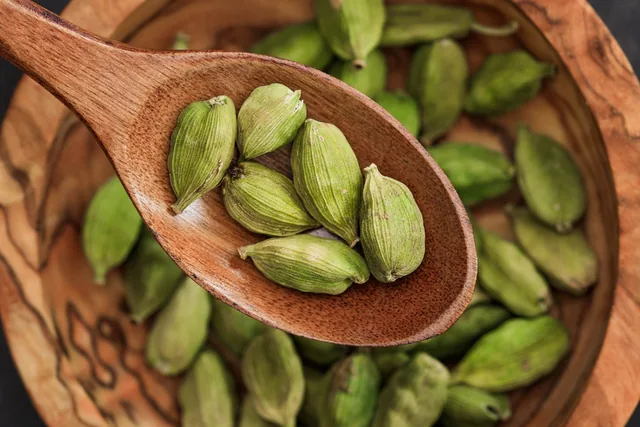
A cardamom pod is a remarkably small parcel for so much perfume. Crack one open and the little dark seeds inside smell as though they have far more ambitious plans than their size suggests.
In a curry, that fragrance can lift the richer flavours around it. In something sweet, it feels equally at home. Green elachi does not see why dinner and dessert should have separate guest lists.
Which cardamom is in the tin?
Green cardamom is Elettaria cardamomum, a member of the ginger family native to the Western Ghats of southern India. Inside its fruit are three chambers of aromatic seeds. The plant is a leafy perennial: those neat pods do not grow on a little spice tree. Kew’s cardamom profile describes the plant and its origins.
Black seeds inside a green pod are normal. They do not make it black cardamom. The larger, darker pods sold as black cardamom come from a different plant and bring a different flavour.
A fragrance with a long history
Kew records cardamom in Sanskrit texts from the fourth century BC and in court recipes from Mandu around 1500, including flavoured rice dishes and sherbets. Its history reaches well beyond the modern curry cupboard. Those historical references also help explain its comfortable place in both sweet and savoury cooking.
That is a useful thought when a familiar spice begins to feel limited to one recipe. The same pod that belongs among whole spices in a pot of breyani can suggest an entirely different direction in a milky dessert or a warming drink.
Pods, seeds or powder?
Whole pods make sense when the recipe wants the spice to infuse a pot. Give them a gentle crack if the method asks for it, rather than pulverising the husks into rough fragments. Remove the pods you can find before serving, or let your guests know they are there.
Seeds are useful when you want to grind a small quantity yourself. Open the pods, collect the seeds and follow the recipe’s instruction for crushing or grinding. A pod count is not the same measurement as a spoonful of powder.
Ground cardamom blends conveniently into sauces and mixtures. A product labelled “decorticated” has had the husk removed before grinding. Its flavour can include floral and citrus notes as well as warmth. McCormick’s product guidance explains the term.
Good company in a Durban kitchen
Start with recipes that show what the spice is doing, rather than adding it to every pot on principle.
- Our lamb-or-chicken biryani includes green cardamom with cumin, coriander, fennel, cinnamon and cloves. It also uses black cardamom: the two can share a dish when the recipe balances them.
- Aunty Maurine’s Durban Mutton Curry includes green elachi in its whole breyani mix. Here the perfume sits among several spices around the meat and potatoes.
Cinnamon and cloves are useful companions, but all three have strong personalities. If a ready-made blend is already going into the pot, check its ingredients before adding another handful of pods.
When the perfume gets too enthusiastic
The aim is a dish you want another spoonful of, not a competition to identify the cardamom. Follow the recipe’s quantity on the first attempt. If you want a gentler result, note that preference and reduce it next time.
Do not use a spoonful of ground spice to replace a single pod by guesswork. And do not reach for smoky black cardamom expecting the same result in a delicate sweet dish. These are flavour decisions, rather than rules against particular ingredients sharing a plate.
What does the health research say?
A small study followed 20 adults with raised blood pressure who took cardamom powder daily for 12 weeks and reported lower readings. That limited finding does not establish a benefit from the few pods shared across a family meal, or make cardamom a replacement for treatment. The original study identifies the species as green cardamom.
Keep the fragrance for the food
Store the spice tightly closed, away from heat, moisture and sunlight. Measure it into a spoon away from the steaming pot before adding it. McCormick’s storage guidance explains why steam and spice jars are poor neighbours.
Next time you open a pod, take a moment to smell it. That is the enjoyable part of knowing your ingredients: a tiny parcel becomes a flavour you recognise.