
Ingredients
Cinnamon & Cassia: The Bark Behind the Flavour
Learn how cinnamon and cassia differ, why they work in savoury curry, how to choose whole or ground bark and what to know about coumarin.
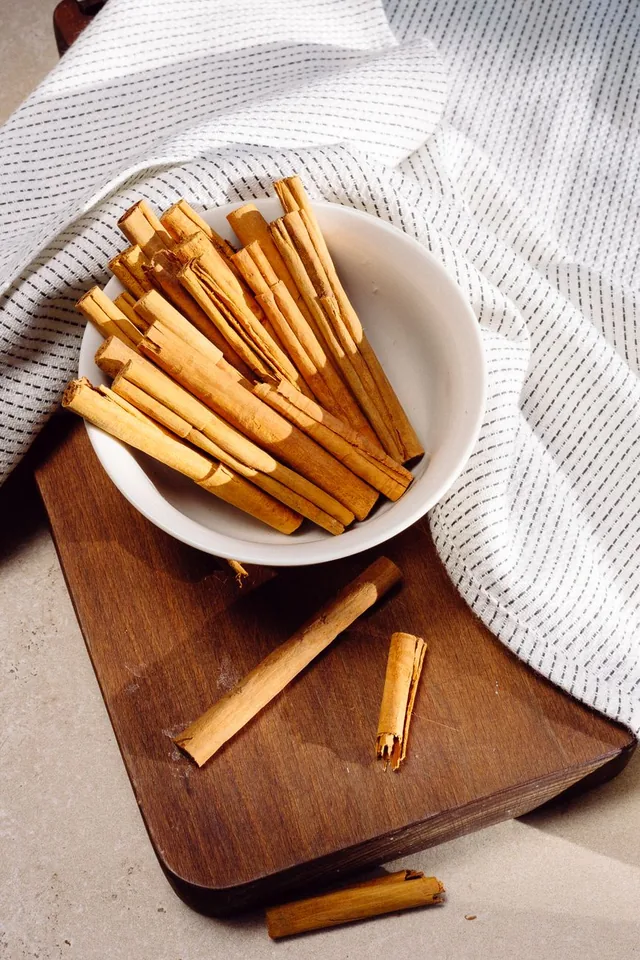
A piece of cinnamon in a curry can surprise anyone who knows it mainly from pancakes. Surely that belongs with sugar?
Try thinking of the aroma before the sweet dish you associate it with. Cinnamon brings warmth and fragrance. In the company of onions, meat, chilli and other spices, those qualities can be just as welcome at supper as they are at dessert.
What is actually in the packet?
Cinnamon comes from the dried bark of trees in the Cinnamomum group. Ceylon cinnamon is Cinnamomum verum; cassia refers to other commercially used cinnamons, including Chinese cinnamon. Both are culinary spices. “True cinnamon” is a common name for Ceylon cinnamon, not a reason to accuse every cassia packet of impersonation. NCCIH's cinnamon guide
Ceylon quills are made from thin inner bark, assembled into rolls. Spices Board India describes the careful joining and drying of those strips. A cinnamon stick is a prepared plant ingredient, rather than a twig that somebody found on the ground. How cinnamon quills are made
A long life beyond the baking cupboard
Ceylon cinnamon has a close connection with Sri Lanka, while Chinese cassia comes from a different regional growing tradition in Asia. Cinnamon has a long history in the cuisines and traditional medicine of places including China, India and Persia. Its use in savoury food is therefore no modern kitchen prank. Ceylon cinnamon, Chinese cassia, historical context
In our recipe book, Shane's Mutton Curry includes cinnamon sticks among the whole spices. The aim is a fragrant savoury gravy. Nobody needs to reach for the cinnamon sugar.
Choose with your nose and the label
Different cinnamons have different aromatic profiles, and products vary. If the species matters to you, buy a clearly labelled packet rather than trying to identify ground powder by eye. The McCormick Science Institute distinguishes several commercial types, including Ceylon, Chinese, Indonesian and Vietnamese cinnamon. A guide to commercial cinnamon types
For cooking, compare the aroma of the product you have with what you used previously. Keep the rest of the recipe steady when trying a different cinnamon. That makes it easier to understand whether the change suits your taste.
Sticks and powder have different jobs
- Whole bark is useful in a simmering curry or rice dish. It flavours the food while remaining a piece you can remove before serving.
- Ground cinnamon mixes throughout a sauce, marinade or spice blend. Once it is in, you cannot fish it out.
- Broken bark can be useful, but count the pieces and look for fragments before serving. A mouthful of woody spice is not the surprise you want to give a guest.
A stick is not a standard spoon measure: lengths and thicknesses differ. Follow the recipe's form and quantity, rather than assuming a universal conversion. Zelna's Chicken Curry uses a pinch of ground cinnamon, illustrating a quite different approach from a pot flavoured with whole bark.
Its friends in a savoury pot
Cloves and cardamom are familiar aromatic companions. Coriander and cumin can bring a more earthy or citrus direction, while ginger, garlic and chilli help place the mixture firmly in savoury territory. Our garam masala guide introduces a blend in which several of those spices meet.
The useful caution is about quantity. Cinnamon, cloves and star anise can all become conspicuous, especially when extra whole spices are added to an already fragrant masala. Read the blend first. If you want to adjust it, choose one change rather than increasing everything together.
There is no general rule against cinnamon and chilli sharing a curry. The question is whether you can still taste the dish you intended. If the bark is dominating during cooking, remove accessible whole pieces; adding more chilli will not remove cinnamon's flavour.
Health benefits, and the coumarin difference
NCCIH says research does not clearly support cinnamon for any health condition, including the popular claims around diabetes and weight loss. It also notes an important distinction: some cassia products contain appreciable coumarin, whereas Ceylon cinnamon contains only traces. Prolonged high intake can be a concern for susceptible people, particularly those with liver disease. Ordinary food use is different from taking large daily amounts or supplements. Evidence and safety
That makes clear labelling useful. It does not require treating the occasional cinnamon stick in a family curry as a health emergency. Choose the spice for the recipe, and discuss supplement use with a clinician rather than turning a food article into a treatment plan.
Give the bark somewhere dry
Keep cinnamon in a tightly closed container away from steam, sunlight and the heat of the stove. Buy powder in amounts you will use while its aroma is appealing, and keep whole pieces clean and dry.
The next time you lift the lid on a curry containing cinnamon, notice its fragrance before tasting. That familiar baking-cupboard smell has found another perfectly good place to belong.