
Ingredients
Cloves: Little Spice, Big Voice
Explore cloves from unopened flower buds to the Durban curry pot, with a brief history, good pairings and practical advice on keeping their flavour balanced.
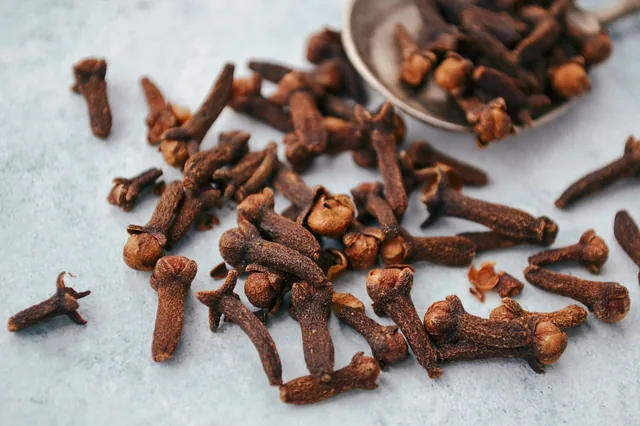
Cloves are small enough to disappear beside a cinnamon stick, but nobody should mistake that for shyness. One badly placed mouthful can remind you exactly which spice has been simmering in the gravy.
Used thoughtfully, though, cloves bring a deep, warm fragrance that makes other ingredients feel more interesting. They are worth knowing both for what they add and for how easily they can add too much.
The flower that never opened
A clove is an unopened flower bud from Syzygium aromaticum, an evergreen tree. The buds are picked and dried before they bloom. That little rounded head and slender stem are the remains of a flower, not a seed or a piece of bark. Spices Board India
Once you know that, the spice tin becomes rather more interesting: bark beside buds, dried fruits beside underground stems. A curry is a surprisingly varied collection of plant parts before the onions even enter the conversation.
A small bud with a difficult history
The clove tree is native to Indonesia's Maluku, historically called the Spice Islands. Kew's account describes how competition for the clove trade drew Portuguese and Dutch colonial powers to the region, and how the Dutch destroyed trees outside controlled areas to protect a monopoly. The history behind an ordinary kitchen jar includes coercion and destruction as well as trade. Kew's clove history
Cloves are now grown in several other regions, including Madagascar, Zanzibar, Sri Lanka and India. Their use also stretches across sweet and savoury foods. There is a long journey between a tropical flower bud and a Durban pot of curry. Clove cultivation and culinary uses
Why such a little thing smells so strong
Eugenol is a major constituent of clove oil and contributes to the spice's characteristic aroma. That is also why discussions of cloves sometimes wander from the kitchen into dentistry. The smell may be familiar, but food, extracted oil and a formulated dental product are different things. Tennessee Poison Center's explanation
In cooking, think warm, pungent and persistent. Clove can be delightful in the background of a blend, but it does not need a starring role in every mouthful.
Whole or ground?
- Whole cloves suit methods that simmer whole aromatics. Keep track of them and remove accessible pieces before serving.
- Ground cloves spread through the entire mixture. Measure carefully because there is no practical way to retrieve them afterwards.
- Cloves already in a masala count too. Read the ingredients before adding another helping from your spice tin.
Our Durban Curry Powder recipe specifically emphasises a teaspoon of ground cloves rather than a tablespoon. That is a useful reminder to read the unit as carefully as the ingredient name. Follow its full blend rather than using that amount as a rule for an individual curry.
When heating cloves in oil, follow the recipe and keep the heat controlled. There is no advantage in taking a fragrant spice to the point where it smells burnt. Have the next ingredients ready before beginning the whole-spice stage.
Good company for a strong personality
Cinnamon, cardamom and black pepper are familiar companions in fragrant spice mixtures. Coriander and cumin add other notes, so the result can be more interesting than a pot dominated by one sweet-smelling spice. Our garam masala guide shows how these ingredients can belong to the same blend.
For a closer look at the broader technique, read what tempering spices means. Pay attention to the method in the actual recipe you choose: a whole-spice beginning and a final addition of ground masala are different jobs.
Clove is compatible with both sweet and savoury dishes, but that versatility is not an invitation to double it. If cinnamon and star anise are already prominent, a heavy extra dose of cloves can crowd out the quieter ingredients. Adjust one aromatic at a time and make a note for the next batch.
There is no useful rule that forbids cloves with chilli, garlic or another ordinary curry ingredient. The usual problem is proportion. More heat may change the dish, but it cannot subtract the clove you have already added.
What about health benefits?
Clove oil has a history of medicinal use for toothache; the European Medicines Agency's assessment concerns that oil as a herbal medicinal preparation. This does not establish that eating cloves in curry treats dental disease or provides the same effect. Toothache still needs appropriate dental attention. EMA's clove-oil record
Concentrated clove oil can also cause serious poisoning if swallowed inappropriately. Keep it separate from cooking advice: it is not a substitute for a jar of cloves, nor an ingredient to add for extra health benefits. Tennessee Poison Center
Let the jar last sensibly
Store cloves tightly sealed in a dry cupboard away from heat and light. If you seldom use ground cloves, buy a small packet rather than a large container that will spend years making guest appearances.
The aim is a curry that smells inviting, tastes balanced and contains no surprise woody mouthfuls. Give cloves a clear role and a careful measure, and this little flower bud will do plenty of work.