
Ingredients
Fresh Coriander / Dhania: The Final Handful
Discover fresh dhania’s story, why coriander tastes soapy to some people, how leaves differ from seeds, and how to use and store the whole bunch.
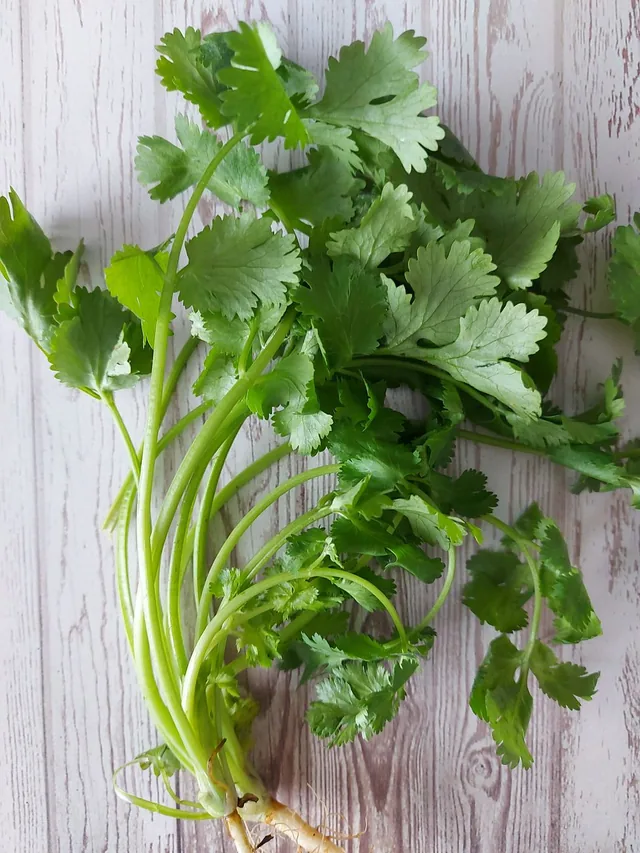
The curry is ready. The potatoes are soft, the gravy looks right, and everyone has begun hovering. Then comes the handful of fresh dhania.
It is a small finishing gesture with a noticeable effect: green against the sauce, a fresh aroma above the warmer spices, and the sense that the pot is finally ready for the table. Unless, of course, someone at that table thinks coriander tastes like soap. We will get to them. They deserve dinner too.
One plant, two very different ingredients
Fresh coriander leaves and coriander seeds come from Coriandrum sativum. In American recipes the leaves are usually called cilantro; in many South African kitchens, fresh dhania is the familiar name. Check whether a recipe means leaves, seeds or ground seed before reaching for the packet. University of Illinois’s plant guide
A spoonful of ground coriander will not supply a handful of green leaves, and chopped leaves will not behave like toasted coriander seed. The plant has given us two useful ingredients. There is no reason to make either one impersonate the other.
A familiar herb with an old family story
Coriander's history reaches much further back than today's supermarket herb shelf. The British Museum holds a linen bag from Antinoupolis in Egypt containing fragments of coriander seeds alongside cumin. The bag is dated broadly between the first and eighth centuries. This is evidence for the spice's long use, rather than proof of how anyone garnished a meal. British Museum collection record
That distinction matters. We can enjoy the connection without inventing an ancient recipe. The modern plant continues to do double duty: harvest leaves for the kitchen, or let it flower and eventually produce the seeds used as a spice.
About that soap argument
If you adore coriander, it can be baffling when somebody wants it kept away from their plate. Research has found an association between perceived soapiness and a genetic variant near smell-receptor genes. Genetics is part of the picture, not a simple switch explaining every preference. The researchers also discussed familiarity and other influences. Read the cilantro-preference study
The hospitable solution is easier than a debate about their taste buds: put the chopped herb in a small bowl and let everyone help themselves. You get your fresh dhania, they get a meal they enjoy, and nobody has to deliver a speech about soap.
More than a pretty scattering
For an example of the finishing role, Durban Green Banana Curry cooks with curry leaves and finishes with fresh dhania. Our Broad Bean Curry also uses fresh coriander as a garnish. The leaves complement the cooked dish rather than replacing its ground spices.
Start with a little, taste, then offer more. A broad handful can be lovely for someone who enjoys the herb, but it can dominate a small bowl. Quantity is a matter of the eater and the dish, not a test of commitment to curry.
Prepare the bunch before the final rush. Separate damaged leaves, wash away any grit, and dry what you plan to chop. A dripping bundle is awkward to cut and can leave the serving dish wetter than intended. Tender stems can be chopped finely when you want their texture; discard tough or damaged parts rather than assuming the entire bunch has to go in.
Our mutton curry for bunny chow includes fresh dhania among its aromatics. It is a useful example of how a rich, warmly spiced curry can still welcome something fresh.
Pair it thoughtfully
Tomatoes, chilli and a little citrus are useful partners when you are making a fresh accompaniment. With curry, let the existing seasoning guide you: fresh dhania can sit beside cumin and coriander seed without making them redundant. A raw onion accompaniment and a creamy yoghurt one will each give it a different setting.
The mistake is treating the garnish as compulsory for every plate or using it to hide a poorly balanced sauce. Finish the cooking and seasoning first. Fresh leaves are a finishing choice, not a repair kit.
And its nutritional contribution?
Fresh coriander contains nutrients including vitamin K. That is a useful contribution from a plant food, but the amount you receive depends on how much you eat; a scattering over several portions is a small quantity. Enjoy it as part of varied meals rather than treating the garnish as a concentrated health product. Oregon State University’s herb information
Rescue the rest of the bunch
Refrigerate fresh coriander upright in a little water with a loose bag over it. Wash before use. For longer keeping, clean, dry leaves can be frozen for cooked dishes; they will not give you the same fresh garnish texture. Oregon State’s storage guidance
Planning a second use is often the simplest improvement. A bunch bought for tonight's curry can have another job tomorrow, while it is still something you are pleased to find in the fridge.