
Ingredients
Why Does Coriander / Dhania Taste Like Soap to some people?
Fresh coriander can taste soapy because people perceive its natural aroma compounds differently. Genetic differences help explain this, but they are only part of the story.
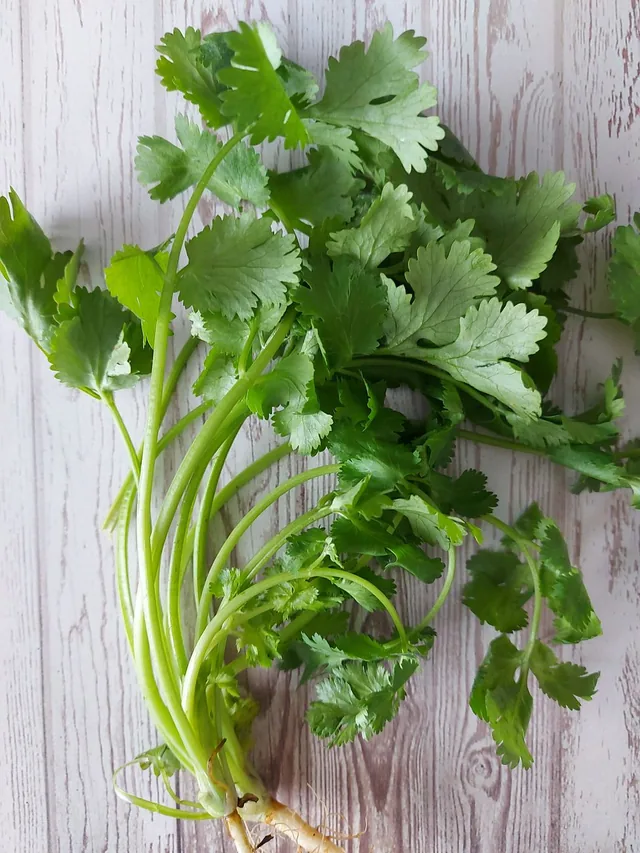
You have spent the afternoon getting the curry just right. The potatoes are soft, the gravy is rich, and a final handful of dhania lands on top. Someone takes a bite and says it tastes like washing-up liquid.
Before you defend your cooking, put down the wooden spoon. They may be experiencing that little green leaf quite differently from you.
Dhania, dhanie, cilantro: are we arguing about the same herb?
Yes. Around a Durban table you might hear dhania, or see it written as dhanie. American recipes generally call the fresh leaves cilantro. The plant is Coriandrum sativum, which also gives us coriander seeds. The University of Illinois plant guide explains this useful double life.
Here we are talking about the fresh leaves. For the broader kitchen guide, including storing the bunch and using it in curry, see Fresh Coriander / Dhania: The Final Handful.
Your nose has a seat at the dinner table
We usually say a food “tastes” a certain way, but flavour is a combined experience. The tongue detects basic tastes such as sweet, salty, sour, bitter and umami. Aroma contributes another layer: as you chew, odour molecules reach smell receptors through a passage connecting the mouth and nose. Texture and temperature join in too. The US National Institute on Deafness and Other Communication Disorders describes how these senses work together.
So the coriander argument is not necessarily about one person having more adventurous taste buds. The smell of the herb is an important part of what arrives as flavour.
Where does the soap come in?
Coriander contains naturally occurring aroma compounds called aldehydes. Some aldehydes are also used in soap fragrances. That overlap helps explain why the herb can bring a bathroom rather than a kitchen to mind. It does not mean the plant contains a squirt of detergent. The American Chemical Society’s explanation makes the connection between these compounds, smell receptors and our associations with familiar scents.
For the coriander enthusiast, the garnish is a welcome flourish. For the person detecting a strong soapy note, it can distract from everything underneath. “But there is hardly any!” is not much comfort when that is the flavour they notice first.
Is there really a coriander-hating gene?
There is evidence for a genetic contribution, but no simple on/off switch. A 2012 study in the journal Flavour examined 14,604 participants who reported whether coriander tasted soapy, then tested the association in a separate group of 11,851 who reported liking or disliking it. Both groups were primarily of European ancestry.
The researchers found an associated DNA variant near a group of smell-receptor genes. One candidate was OR6A2, linked to detecting aldehydes. They proposed it as a possible contributor; they did not prove that one gene decides everybody’s opinion of dhania.
The study also distinguished detecting soapiness from disliking the herb. Those are related, but not identical. Familiarity and other environmental influences may matter, and this was not an experiment showing how to teach somebody to enjoy coriander. Its findings should not be turned into a universal percentage for every community.
What about coriander powder in the masala?
A handful of leaves and a spoonful of ground coriander seed are different ingredients, even though they come from the same plant. Do not assume that “no fresh dhania, please” also means removing coriander powder from the entire recipe. Ask which ingredient the person dislikes.
Equally, ground coriander is not a like-for-like replacement for a fresh garnish. Keep the seed in its spice role and make a separate decision about the leaves.
How to keep everyone happy over a Durban curry
- Serve the garnish separately. A small bowl of chopped dhania lets everyone finish their own plate. It is a particularly easy approach with mutton curry for bunny chow.
- Check accompaniments too. Ask before stirring fresh coriander into a shared salad, chutney or yoghurt dish. Leaving it off the curry achieves little if it is already mixed through the side.
- Offer a different finish. If the diner enjoys it, a little chopped flat-leaf parsley is an option. It brings its own flavour rather than reproducing dhania. Leaving the garnish off is also perfectly reasonable.
- Keep experiments small and voluntary. If someone wants to try a little coriander, let them add it to one spoonful. Do not promise that chopping, cooking or adding lemon will make the soapy perception disappear.
There is no need to make dinner a coriander conversion course. Put the dhania on the table, pass the curry, and let each person decide how green their plate should be.